There’s much to be said-much has been said-about hip hop and these 50+ years since it’s graced our universe. This is how this post came to be. I’m begging you to bear with me, because, like I said-I have a lot to say.
I’m a product of rap’s golden era. I came of age right along with it. It’s as if we were in a relationship. I fell in love, got cheated on, betrayed and hurt by H.E.R., but as the adage maintains, if you really love something, you have to set it free…and if it comes back to you, it was meant to be.
And so, I had to put some space between us for a while as I reflected on being a Black woman growing up with hip hop when, back when I was pumpin’ my fist and “rubbin’ my tits” because I loved hip hop, but then at the same time, some of the dopest lyrics were disrespecting me. Snoop’s Ain’t No Fun to be specific, yet somehow, those lyrics validated me. I suppose because rap had become so popular-white people loved it too-I thought accepting it, validated me-and my people. We were finally being seen.
What about Us? A Brief, But Necessary Segue
Straight Outta Compton celebrated the rise of NWA-you can’t talk about the golden era without mention of NWA. I loved the movie, but it purposely left out Dr. Dre’s assault on Dee Barnes, and Suge Night’s abuse of Michel’le, which while understandable, is inexcusable.
It got me thinking about #METOO. The movement held powerful white men responsible for their sexual exploitation and abuse of mostly white women, ruining many careers and reputations in the process. I thought about how it was was that rappers weren’t held to that same standard. And I find it surprising that there wasn’t as much of an uproar about sexual abuse where the dominant voices were Black men.
And yet, despite East Coast vs West Coast and other notorious rivalries, despite the misogyny… hip-hop made me proud to be a part of a movement of young, gifted, and Black brothers and sisters demanding to be heard. My love made it’s way back to me. Reminded me to “keep my head up. That things would get easier.”
***
Music is to writing, for me, as wine is to cheese. It’s a complimentary pairing; accentuating and enhancing flavors to bring out the best in both. When I’m writing, depending on what I’m writing, the music must compliment the writing, and enhance the message I’d like to convey.
Naturally for this topic, the genre had to be hip hop. I didn’t know what songs, or which artist I wanted to hear, but I figured once I searched Spotify at #hiphopgoldenera, I’d find exactly what I was looking for-or it would find me.
Lo and behold Eminem’s picture came up. Now, those of you who know me, know I’m one of his greatest fans. Lose Yourself is one of the first songs on my workout playlist. He’s a skilled MC. The passion, pain, and grit that he brings to the mic, especially on that song, motivates me to do one more rep. To push myself. But here’s the thing: Eminem as a representative of the golden era of hip hop is is misleading.
***
Whitewashing Black music-stripping it of its roots is a byproduct of racial oppression.
Spotify is but one example of this misappropriation. And, for the record, I’ve noticed that when I search African artists, or genres with their roots in African I’ll get a few songs, but by the time my playlist is through, non-indigenous creators of the music will show up on my playlists far more frequently than the originators.
Hip Hop culture has its origins in slavery and colonization. It’s no coincidence that rappers are descendants of Caribbeans. In the early days, the only money to be made was the few nickels, dimes and a few dollars to charge for a party, or a mixed-tape. In 2006 it was worth about 10 billion, as of this time of writing it’s a multi-billion dollar industry- 74 billions to be exact. *
Yet, the originators will never see a dime of what they are owed, because most often they were poor, with melanin-rich skin, unable to read and comprehend the contracts they signed that stiffed them. Now, white rappers “legitimized” hip hop, making industry execs rich, because out in the burb’s they couldn’t get enough of groups like The Beastie Boys, House of Pain* and Eminem.
I am not negating the contributions of “others”, like DJ Kool Herc said of hip hop; “this is not a me thing; it’s a we thing.” And yes, hip hop culture has the unique ability to unite people all over the world, as any ingenious art form will do, but because of what our ancestors endured to bring this music to you, nuff respect due.
***
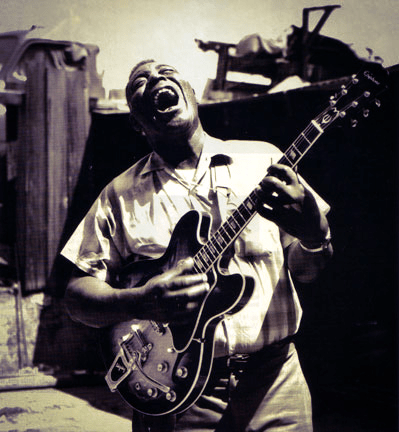
Howlin’ Wolf Courtesy of Rubber City Review
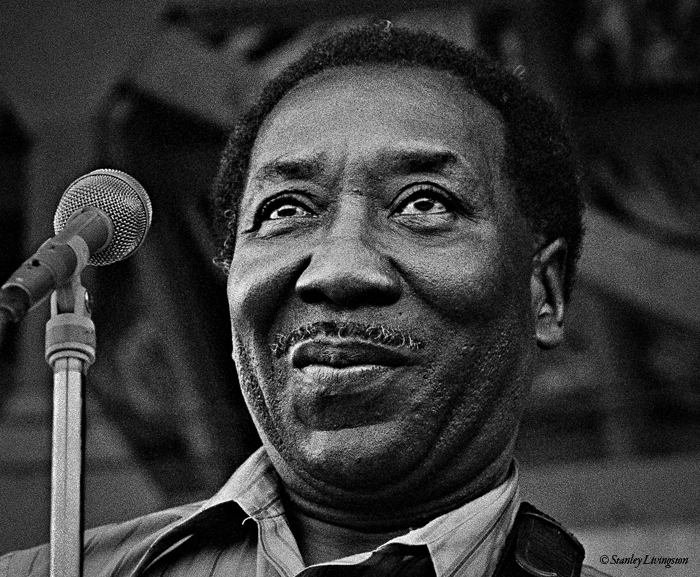
Howling Wolf. Muddy Waters. Just two of the millions of poor, Black, gifted artists to whom Rock and Roll owes its fame. It doesn’t surprise me that a large majority of our beloved blues musicians died from heart-related issues.
There would be no Rolling Stones were it not for Muddy Waters, having named their band after one of his songs.
Muddy Waters, Courtesy of Rubber City Review
***
White fathers could tolerate Jagger, Elvis, Jerry Lee Lewis or other blue-eyed soul singers gyting their hips, crooning to their daughters-not so for a Black man. These white rock and roll groups sanitized “nigger” music.
To many whites and some black folk, The Blues was considered sinful, full of lust and longing, and copious gin and whiskey drinking. White folk in the south, especially, viewed Black men as sex-crazed, riotous savages whom, as they were portrayed in the 1915 film, Birth of a Nation, (The Clansmen) screened in President Woodrow Wilson’s White House. The film glorified the Ku Klux Klan as protectors of the white race, saviors of virginal white women in the wake of “free” Blacks, running wild, and “free.”
When states began emerging, legislators wanted to determine how to tax and represent the population. 3 out of 5 Black slaves counted as 1 human being. According to Chief Court Justice Roger Tany, Blacks had “no rights which the white man was bound to respect.”
Fingers that once bled picking cotton would transfer their pain to their music, they were now picking guitar strings, belting out the blues, and creating jazz; the music of slaves and their descendants remains a soulful expression of the Black experience in America from disenfranchisement, to de jure and de facto segregation.
Black music-soul music-“race music” as white folks once called it-gave the world beauty from centuries worth of terror. Our music is a culmination of injustice and oppression inflicted upon the descendants of Africans in America and the diaspora.
The Stars of Motown were the descendants of enslaved laborers, women and men who made music as they toiled. This was, in part, to get through the work itself but also to transcend the culture of the slave condition-the mindset of worthlessness and dispossession.
-The 1619 Project by Nicole Hannah-Jones
***
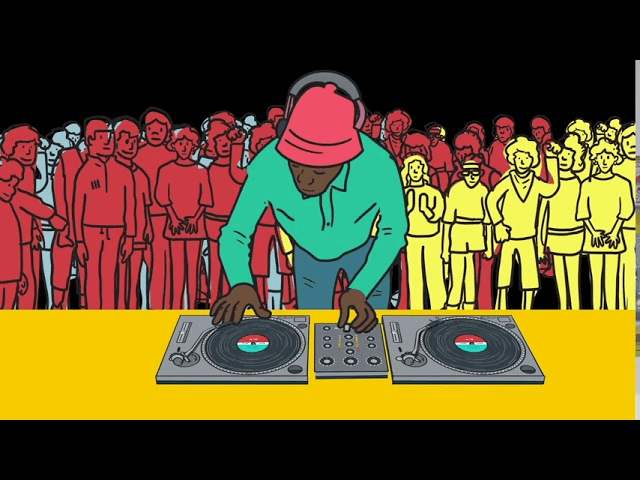
Courtesy of Hip Hop Extraordinaire
IF IT WASN’T FOR THE BRONX, THIS RAP SHIT PROBABLY WOULDN’T BE GOIN’ ON…*
As previously stated, this post is my response to the type of argument I refuse to engage in. It’s an argument I will never win. We’re all biased when it comes to our favorite MCs. So I took to my “soapblog” to explain/defend myself.
A debate had ensued as to which city produced the best MC’s. I’m not saying New York is the ONLY city to produce the dopest MC’s. What I am suggesting is that you cannot forget the roots of a social, political and cultural movement. Especially one that is built on the backs of Blacks.
***
After the passage of the 1965 (three years after gaining independence from Britain) Immigration Act, there was a mass migration of Caribbean immigrants to Britain, The United States and Canada. Many of them (my family included) sold their assets, and came to America in pursuit of economic stability and financial freedom. Of course, they would soon face economic exploitation, racism and social inequality experienced by residents in urban areas across New York City.
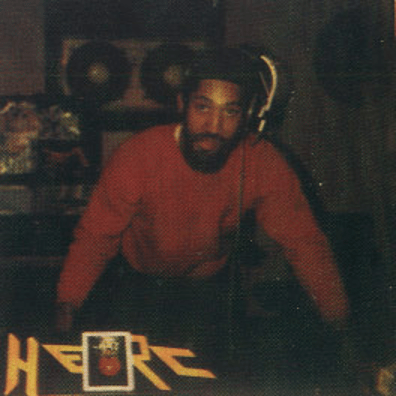
Clive Campbell, who would soon come to be known by his people as DJ Kool Herc (Hercules-because of his size and stature), and his family, were among this mass migration. They arrived in The Bronx in 1967 when he was 13. He and his friends would revolutionize parties by changing the way people heard, and danced to records, isolating and extending the break beat, which kept dancers dancing, and as long as the dancers are dancing, which as every Jamaican knows, is the hallmark of a dope ass party!
Eventually, those instrumental breaks made way for the MC the master of ceremonies aka the rapper to move the crowd, as another old school MC, Rakim of legendary duo Eric B and Rakim, would say. The rest is hip-hop history.
But all of them was good – all of them. But I couldn’t – I just could remember sometime I play some particular record that we were – I remember that when we first heard a record called “Seven Minutes Of Funk,” we heard it in a place called – at Hunts Point… And that came out of my collection. And when we played our record – what we did – Coke did – Coke put the record on, and we all walked off the stage. And the record just came on. (Vocalizing). And it kept on going. And it just kept on going through changes. And everybody was like, whoa. You know, even when we played “Heatwave,” the slow record, you know, everybody was shocked ’cause we – you know, we played a lot of records that the radio wasn’t playing till we found out the radio stations started sending spies to the clubs to hear what we’re playing. Then suddenly, a lot of the records now started to get played on the radio.
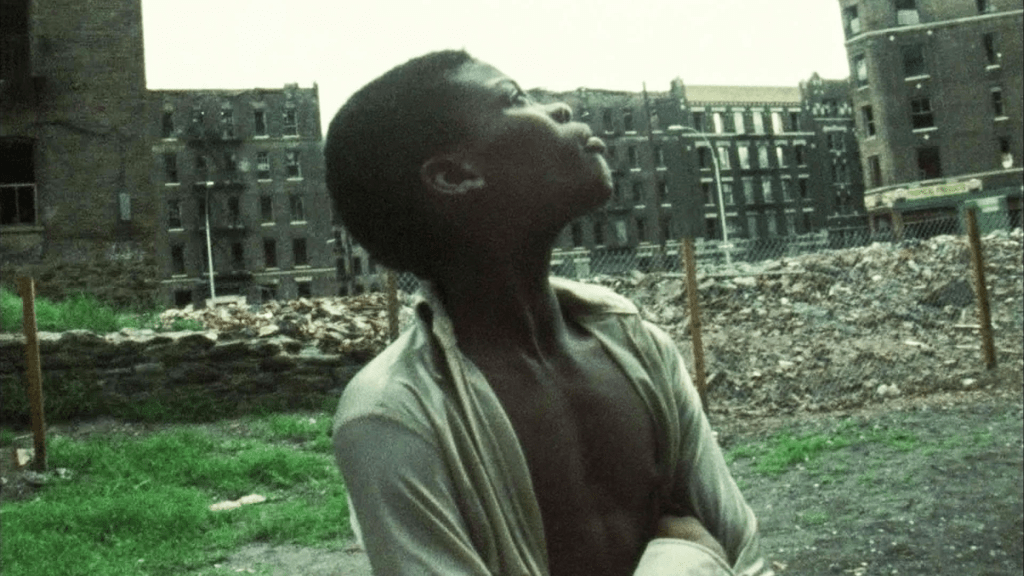
You cannot discuss rap, nor its origins without talking about New York City. Most specifically theburning Bronx of the 1970’s through the 198o’s. 1977 was particularly brutal in the South Bronx. Between the fires, blackouts, and economic ruin, crime was on the rise. Grandmaster Flash and The Furious Five were showing you in their legendary video that “life was like a jungle!” No other place exemplified the chaos and despair that was New York City than the South Bronx.1
While President Gerald Ford expected New York City to drop dead in the 1970’s while the Bronx burned; The Bronx would not. Kurtis Blow, Grand Master Flash , Coke La Rock, Rock Steady Crew, Boogie Down Productions, created some sparks, which became flames, that started a fire, which would not be put out-it would keep spreading: from borough to borough, city to city-until it consumed the world.
***
Courtesy of The Hip Hop Museum
The Chief Cornerstone
I hear my Jamaican grandmother’s (God rest her beautiful soul*) sharp, Kingstonian patois (she had been in Brooklyn for decades but listening to her talk, you’d swear she arrived yesterday), proselytizing about how di people dem did reject Di Messiah, the redeemer of the world-dem did refuse di chief cornastone! Grandma, forgive me for making an analogy you’d hate, but mi mus mek it: The Messiah is hip hop, rap, Blues, R&B and Rock and Roll whose whose origins are in slavery. The builders would be anyone who disputes that fact.
The Bronx-( The South, South Bronx!)– is the foundation, without which, the multi-billion dollar global phenomenon we know and love called hip hop could not stand. Thanks, hip hop. It’s been an amazing 50 years.
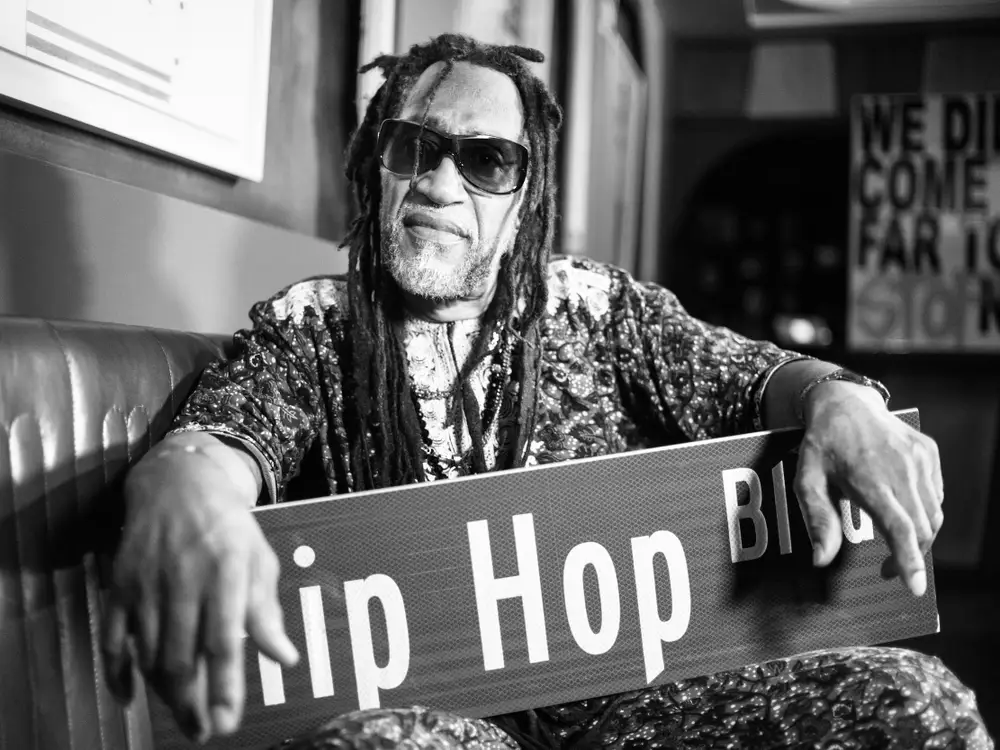
DJ Kool Herc courtesy of @kencen’s video tweet
Agree? Disagree? Agree to Disagree? Let me know in the comments.
Find me on X(@reneebdaqueen), Instagram: (momchairphilosopher), and facebook.
2 responses to “Beyond the Mic: How The Bronx Brought Hip Hop To The World. And Other Facts.”
cocodegraaf
Love this well said and so necessary our pride and contributions to this very specific art form need not be watered down and I love how your article brings the facts to the truth of hip-hop and it’s melanin rich as you say creators ( love that by the way) deserve to be recognized whole heartedly and not be white washed in anyway happy 50th hip-hop I still love H.E.R





 My Power. My Pleasure. My Pain.
Leave a reply to cocodegraaf Cancel reply